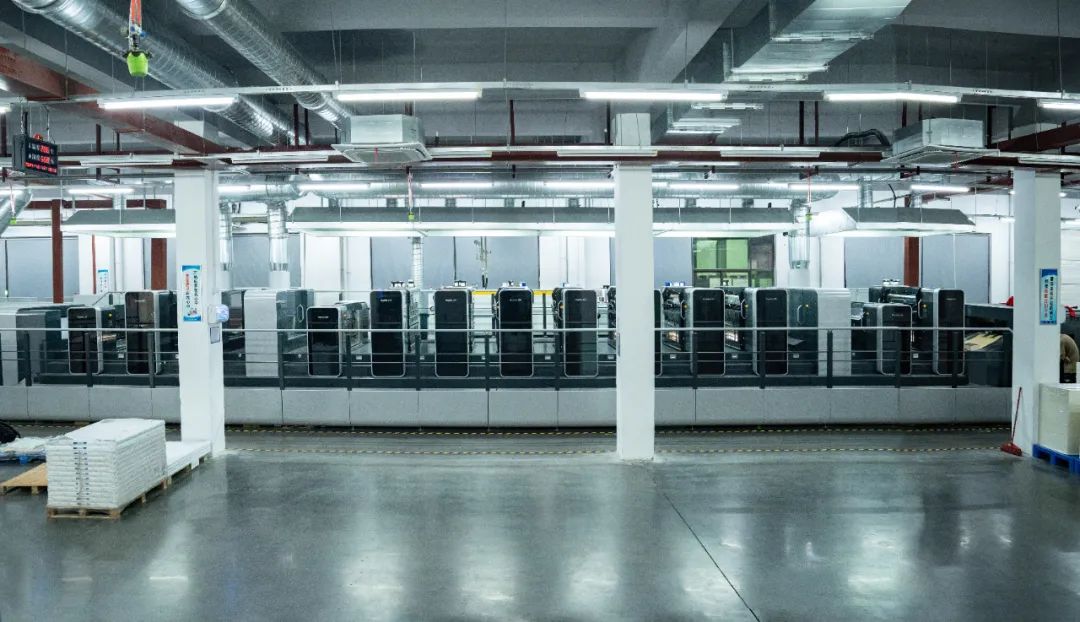
Running a successful printing company in today's competitive market means more than owning the right machines. When order volumes scale up, every inefficiency becomes magnified, delays compound, and quality risks multiply. A printing company that wants to thrive in high-volume production must adopt structured workflow strategies that reduce bottlenecks, improve turnaround times, and maintain consistent output quality across every job.

Every printing company faces unique operational challenges depending on its product mix, client base, and equipment capacity. However, the core principles that drive workflow improvement remain consistent. From pre-press planning to final packaging, a well-managed printing company applies systematic thinking at every stage to ensure that high-volume production runs smoothly, efficiently, and profitably.
One of the most significant sources of delay in any printing company is inconsistent file intake. When artwork files arrive in different formats, resolutions, or color profiles, the pre-press team must spend extra time correcting issues before a single sheet is printed. A printing company that enforces strict file submission standards eliminates this bottleneck immediately. Standardized preflight checklists allow the printing company to catch errors early, preventing costly reprints and keeping production schedules on track.
Digital preflight automation tools have become essential for a modern printing company handling large order volumes. These tools can automatically validate bleed settings, color modes, and image resolution without manual review. When a printing company integrates automated preflight into its order intake system, it reduces human error and shortens the pre-press phase dramatically, allowing more jobs to enter production each day.
A printing company managing dozens or hundreds of concurrent jobs requires a centralized job tracking system to maintain visibility across the production floor. Without clear scheduling, a printing company risks assigning conflicting jobs to the same press, missing deadlines, or underutilizing finishing equipment. Centralized management software allows the printing company to assign priorities, flag rush jobs, and balance workloads intelligently across all departments.
Real-time job tracking also enables a printing company to communicate proactively with clients. When a printing company can instantly report on job status, material availability, and estimated completion times, it builds client trust and reduces the volume of inbound status inquiries that distract production staff from their core work.
Press setup time is one of the most controllable cost factors for any printing company. In high-volume production environments, the cumulative time lost to press makeready can account for a significant portion of daily capacity. A printing company that implements gang printing strategies, standardizes substrate sizes, and batches similar jobs together can reduce changeover frequency and maximize press uptime. This approach allows the printing company to process more jobs within the same shift without adding headcount.
Color management is another critical area where a printing company can drive workflow gains. Maintaining calibrated ICC profiles for each press and substrate combination means a printing company spends less time on color correction and reruns. When color consistency is built into the printing company's standard operating procedures, clients receive predictable results and production waste drops significantly.
Material delays are a hidden productivity killer for any printing company. When substrates, inks, or finishing materials are not available at the right time, entire press runs must be rescheduled. A printing company that implements demand-driven inventory management ensures that materials are on hand before production begins rather than after a delay is already causing disruption. The printing company benefits from shorter lead times, less rush ordering, and more predictable scheduling.
A printing company serving clients in sectors like food, cosmetics, or retail packaging must also maintain a diverse substrate inventory. Products such as art paper bags require specific paper weights, coating types, and structural properties. When the printing company pre-qualifies these materials and keeps safety stock levels appropriate to demand patterns, it eliminates last-minute sourcing issues that would otherwise stall high-volume runs. A well-stocked printing company operating in the custom packaging space understands that material readiness directly determines production velocity.
A printing company that separates press operations from finishing creates unnecessary handling steps and staging delays. Inline and near-line finishing equipment allows the printing company to cut, fold, laminate, or die-cut immediately after printing, reducing the number of times each job is physically moved. This integrated approach shortens the overall cycle time for every order, which is especially valuable when a printing company is managing high-volume packaging or promotional print runs.
For a printing company producing custom-printed paper bags and similar retail packaging, inline aqueous coating or spot UV application can be incorporated directly into the press workflow. This eliminates a separate finishing pass, reduces turnaround time, and ensures that each printed piece exits the production line inspection-ready. The printing company gains both speed and consistency by building finishing logic into the press sequence from the start.
Quality control in a printing company should never be treated as a final gate. A printing company that only inspects finished products at the end of a production run risks discovering defects after thousands of sheets have already been printed. Instead, a well-run printing company embeds quality checkpoints throughout the workflow, including at press startup, mid-run, and before finishing. This stage-gate approach allows the printing company to catch drift early, correct it immediately, and avoid the cost of reprinting large quantities.
Automated inspection systems have made it practical for a printing company to perform 100 percent inline inspection on high-speed presses. Camera-based systems flag color deviation, misregistration, or physical defects in real time, allowing the printing company to halt and correct issues without stopping to pull manual samples. This level of quality control is now a competitive differentiator for any printing company operating at significant production volumes.
The most common challenge for a printing company at high volumes is managing the transition between jobs efficiently. Each changeover costs press time, and a printing company that has not optimized its scheduling, file intake, and material readiness will lose significant productive capacity across each shift. Addressing these upstream inefficiencies allows the printing company to increase throughput without expanding its physical footprint.
Packaging is often the final step where delays accumulate in a printing company. If a printing company does not have a clear plan for how finished goods are staged, inspected, packed, and dispatched, bottlenecks form at the output end of the production line. A printing company that integrates packing workflows into its production scheduling ensures that the entire order fulfillment cycle is as smooth as the press operations themselves.
Yes. Many of the most impactful workflow improvements a printing company can make are process-based rather than capital-intensive. A printing company can dramatically improve throughput by standardizing file intake, improving job scheduling logic, training staff on consistent operating procedures, and embedding quality checks at earlier stages. Equipment upgrades can amplify these gains, but a printing company that first optimizes its processes will see measurable improvements regardless of the machinery it currently operates.
 EN
EN
 Request An Estimate
 Projects