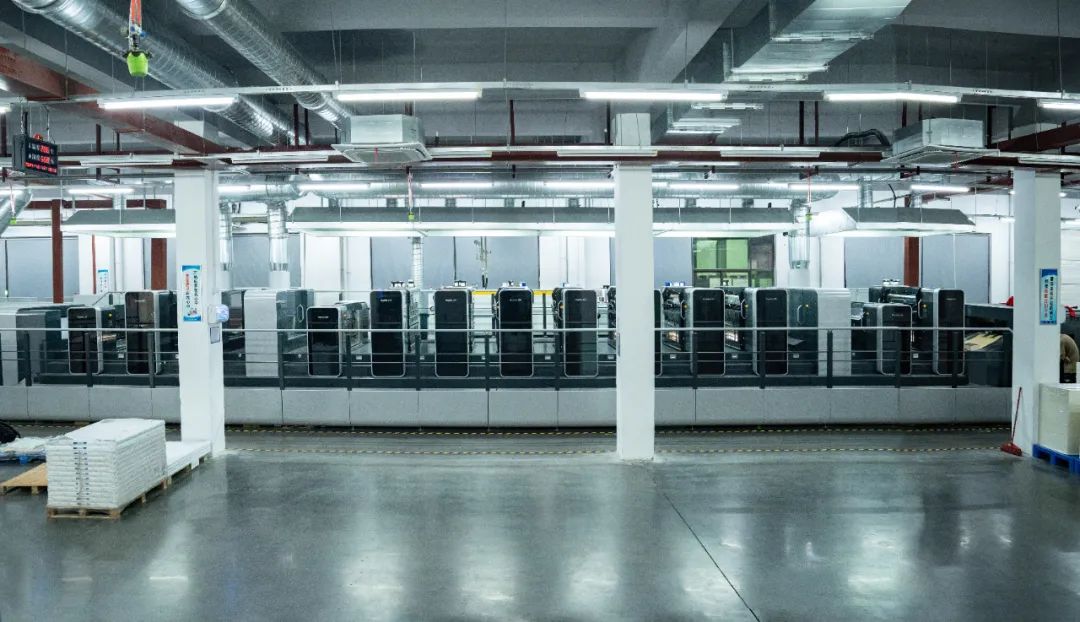
Every printing company faces the same fundamental challenge: delivering results that look and feel exactly the same whether the order is fifty units or five thousand. Clients who reorder packaging, labels, or custom boxes expect the second batch to match the first perfectly. Inconsistency in color, material, or finish can damage brand trust immediately and cost a printing company long-term business relationships.
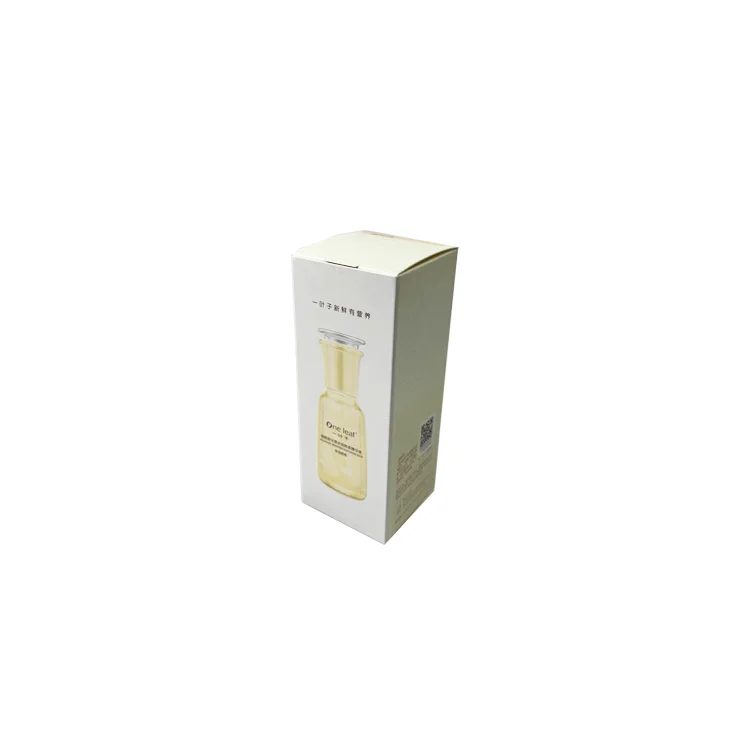
For any printing company that serves B2B clients in cosmetics, retail, or gift packaging, quality consistency is not a bonus feature — it is a baseline requirement. This article explains the core systems, processes, and controls that a professional printing company uses to maintain that consistency reliably across every single order, regardless of volume or complexity.
Color is the most visible measure of quality in any printing company output. A printing company that lacks a rigorous color management system will inevitably deliver inconsistent results. Industry-standard color matching systems, such as Pantone references, allow a printing company to communicate exact color specifications across different machines, operators, and production runs. When a printing company locks color values at the proof stage and documents them in a job file, every future reorder can be measured against that same reference.
Beyond reference systems, a printing company must calibrate its equipment regularly. Ink viscosity, press temperature, and substrate absorption all influence the final printed color. A printing company that schedules consistent equipment calibration reduces the risk of color drift between batches. Color density meters and spectrophotometers give the printing company objective data rather than relying solely on visual inspection, which can vary between operators.
Even when a printing company nails its ink formulas, inconsistent substrate materials can still cause visible variation. A printing company that switches cardboard suppliers mid-run, for example, may find that color saturation changes because the new board has a different coating or fiber density. This is why a professional printing company establishes approved supplier lists for core materials like paper, cardboard, and laminate films.
A printing company that works in cosmetic packaging or gift boxes must pay particular attention to surface coatings because gloss, matte, and soft-touch finishes each react differently to ink. By standardizing material grades and finish specifications, the printing company ensures that every order going through its facility starts from the same controlled baseline, making consistency far more achievable.
A printing company that relies on individual operator judgment rather than documented procedures will always face inconsistency risk. Standard operating procedures define how each step — from pre-press file preparation to post-press finishing — should be executed. When a printing company documents its setup parameters, ink mixing ratios, press speeds, and drying times, it removes the variability that comes from shifting personnel or machine configurations.
Process documentation also protects a printing company during scaling. When order volumes increase and additional shifts or operators are added, a printing company with documented workflows can onboard new staff without sacrificing quality. Every printing company that operates at scale needs these written controls as the backbone of its quality management system.
Before any printing company sends a job to press, the pre-press stage must confirm that the digital file, color profile, and die-cut specifications are correct. A printing company that skips thorough pre-press checks may discover errors only after thousands of sheets have already been printed. Soft proofing on calibrated monitors and physical hard-copy proofs both serve as checkpoints that allow a printing company to catch issues before they become costly.
A printing company that handles repeat orders benefits enormously from archiving approved proofs. When a returning client reorders a gift box or cosmetic packaging, the printing company can pull the archived proof and confirm that every parameter matches. This archive system is a simple but powerful tool that every printing company should maintain as a standard practice.
A printing company that only checks quality at the end of a run risks discovering defects after significant material waste has already occurred. In-line inspection tools, including automated vision systems and regular manual pull samples, allow a printing company to catch deviations early. When a printing company monitors color density, registration accuracy, and cut precision throughout the run, it can make real-time adjustments and keep the entire batch within specification.
Post-production inspection is equally important for a printing company. After finishing operations like lamination, foiling, and die-cutting, a printing company should conduct final quality audits against the approved sample. Any printing company that ships without this final gate check runs the risk of delivering a substandard product, which undermines the trust it has built with its clients.
A printing company that actively solicits client feedback after delivery gains valuable data about real-world quality performance. Sometimes defects that pass internal checks become visible only under specific lighting or display conditions. A printing company that captures this feedback and integrates it into its process improvement cycle continuously raises its quality floor. This feedback loop distinguishes a reactive printing company from a proactively quality-driven one.
Tracking complaint types and frequencies also helps a printing company identify systemic issues. If color complaints cluster around a specific press or shift, the printing company can investigate and correct the root cause rather than treating each complaint as an isolated incident. This analytical approach gives a printing company the ability to maintain and genuinely improve consistency over time.
A professional printing company archives the original color specifications, Pantone references, and approved physical samples. When a reorder arrives, the printing company retrieves these records and uses them as the calibration baseline, ensuring the new batch matches the original as closely as possible.
Regular maintenance is essential for any printing company. Worn rollers, inconsistent ink delivery systems, and uncalibrated press settings all introduce variability. A printing company that follows a scheduled maintenance program reduces mechanical sources of inconsistency significantly across all production runs.
No printing company can guarantee zero variation across extremely high volumes, but a well-managed printing company can keep variation within tightly defined tolerance ranges. By using standardized materials, calibrated equipment, in-line monitoring, and documented procedures, a printing company minimizes the visible differences between the first and last sheet of any large order.

 EN
EN
 Request An Estimate
 Projects